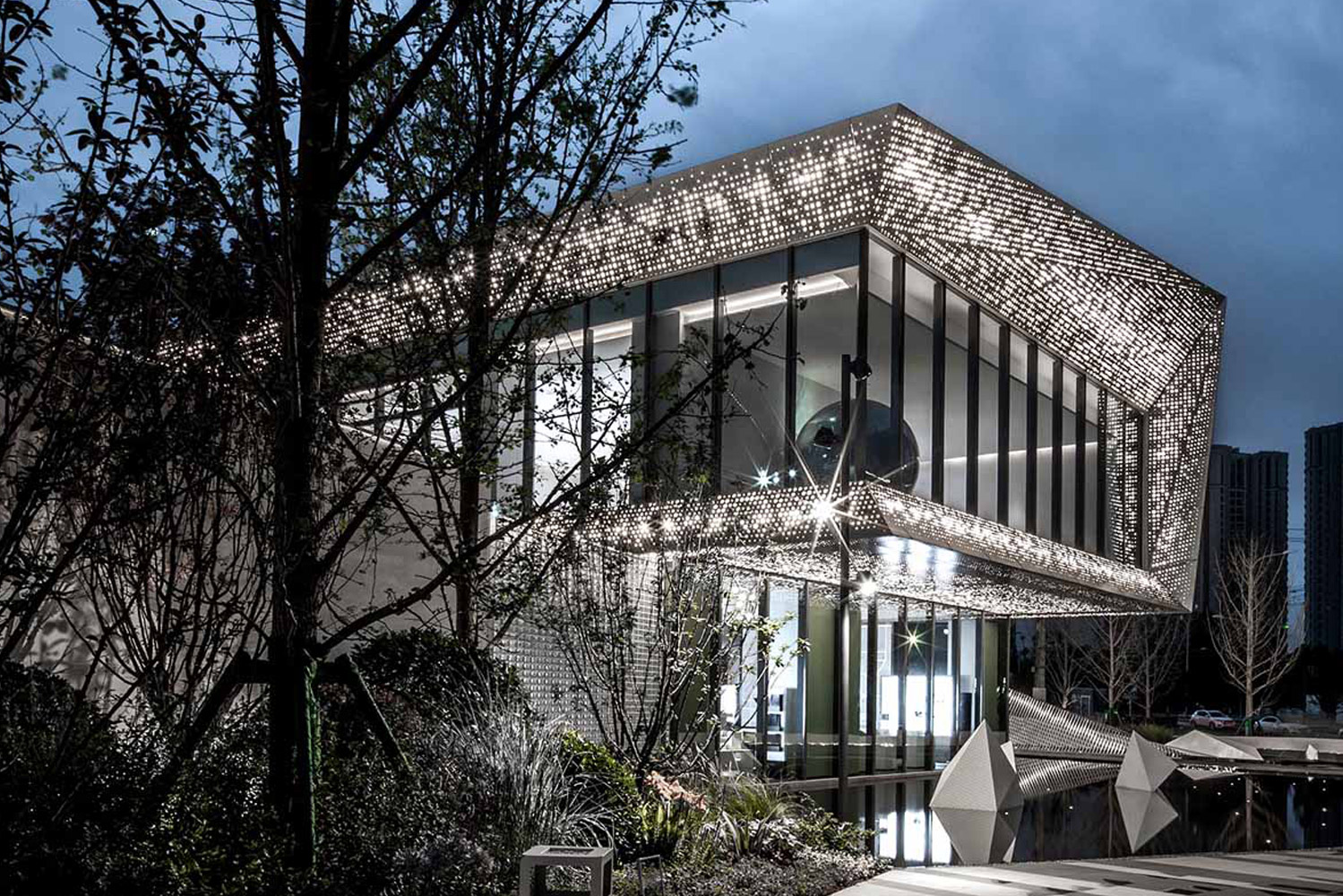
Perforated facades are becoming a powerful branding tool for architects, combining visual expression with environmental performance. These expressive building skins communicate identity, control light, and create memorable landmarks across commercial, cultural, and civic architecture worldwide.
At TBK Metal, architectural creativity is transformed into buildable solutions through engineering expertise, advanced customization, and global project experience. We help architects achieve distinctive branding while meeting performance, durability, and sustainability goals.
What Are Perforated Facades and Why They Matter
Perforated facades are architectural envelope systems created using precisely cut metal patterns. They balance form and function, allowing buildings to express identity while enhancing comfort, durability, and environmental responsiveness.
Definition and Structure
These systems typically consist of patterned metal sheets installed as secondary skins. They enable airflow, solar shading, and controlled visibility, helping architects strike a balance between openness, privacy, and iconic visual presence.
Material Significance
Among available materials, perforated aluminium is widely preferred due to its lightweight strength, corrosion resistance, fabrication precision, and full recyclability—making it ideal for expressive facades across diverse climates.
Functional Performance
Perforation ratios influence daylight penetration, ventilation efficiency, acoustic moderation, and thermal comfort. As a result, facades move beyond decoration to become active contributors to building performance.
Branding Value
Custom patterns, gradients, and lighting effects transform facades into recognizable brand identifiers, enabling organizations to express culture, innovation, and values directly through architecture.
By integrating aesthetics, performance, and identity, perforated facades elevate buildings from purely functional structures into meaningful tools for visual communication and long-term architectural value.
The Role of Perforated Facades in Architectural Branding
Architectural branding increasingly relies on the building envelope. Perforated facades provide architects with a flexible medium to tell brand stories through pattern, light, and scale.
Visual Identity Expression
Brand language is translated into unique geometries, logos, and textures. Perforated facades create instantly recognizable buildings that reinforce corporate presence in dense urban environments.
Light and Shadow as Branding Elements
Controlled perforation allows architects to choreograph daylight and nighttime illumination, projecting brand mood, motion, and emotion onto surrounding public spaces.
Cultural and Contextual Storytelling
Patterns inspired by local culture, history, or symbolism embed regional identity into the building skin, connecting brands with community values and place.
Consistency Across Portfolios
For multi-site organizations, perforated facades maintain a consistent visual language while allowing pattern scale and density to adapt to local climate and regulations.
Through visual, emotional, and contextual communication, perforated facades strengthen brand recognition and long-term urban presence.
Design Strategies Architects Use with Perforated Facades
To maximize branding impact, architects apply deliberate design strategies that align creativity with fabrication and performance requirements.
Custom Pattern Development
Bespoke perforation designs based on brand geometry or narrative turn aluminium sheets into signature architectural elements that balance creativity with manufacturability.
Gradient and Density Control
By varying hole size and spacing, designers control daylight, privacy, and visual transparency—creating dynamic facades responsive to environmental and branding needs.
Integration with Lighting Design
Perforated facades work seamlessly with lighting systems, ensuring strong daytime presence and dramatic nighttime visibility that reinforces brand identity.
Modular and Scalable Systems
Using modular layouts allows perforated aluminium panels to be efficiently installed, maintained, and adapted across different building sizes and future expansions.
These strategies ensure that perforated facades remain expressive, functional, and practical architectural solutions.
Technical Advantages of Perforated Solutions
Beyond aesthetics, perforated facade systems deliver measurable technical benefits that enhance building performance and longevity.
Environmental Performance Control
Perforated metal regulates solar gain and airflow, reducing heat buildup and glare while supporting passive ventilation strategies.
Structural Efficiency and Lightweight Design
Lightweight yet durable panels reduce facade loads, simplify subframe design, and speed up installation without compromising long-term performance.
Acoustic and Visual Balance
Controlled perforation improves sound absorption and visual comfort, helping architects balance openness with privacy.
Durability and Low Maintenance
High-quality finishes protect perforated metal from corrosion and weathering, ensuring long service life with minimal maintenance.
These advantages allow architects to meet branding ambitions while satisfying regulatory, environmental, and operational demands.
How TBK Metal Helps Architects Realize Their Vision
TBK Metal partners with architects to convert design concepts into high-performance facade systems.
Early-Stage Design Collaboration
We support architects from the concept phase, offering material guidance, pattern feasibility studies, and cost-performance optimization.
Advanced Custom Fabrication
Using CNC punching, laser cutting, and precision finishing, TBK Metal delivers highly customized, repeatable, and buildable facade solutions.
Engineering and Performance Support
Our engineering team provides load analysis, shop drawings, and installation recommendations to ensure safety, durability, and compliance.
Global Project Experience
With projects across multiple regions, TBK Metal understands local codes, climate challenges, and logistics—ensuring consistent quality worldwide.
Case Studies: Branding Through Perforated Facades
- Corporate Headquarters: Custom perforated patterns reflect brand geometry while optimizing daylight and visual identity.
- Cultural and Civic Buildings: Locally inspired patterns enhance storytelling, shading, and ventilation.
- Retail and Commercial Projects: Dynamic facades attract attention, improve comfort, and reinforce brand visibility day and night.
- Adaptive Reuse Projects: Perforated systems modernize existing buildings without major structural alterations.
These examples demonstrate how perforated facades successfully integrate branding, performance, and constructability.
Sustainability, Performance & Urban Context
Modern perforated facades support sustainable architecture while responding to dense urban environments.
- Energy Efficiency: Reduced solar gain and improved ventilation lower cooling demand.
- Material Sustainability: Recyclable metals support long lifecycle performance and green certifications.
- Urban Microclimate Response: Shading and airflow improve pedestrian comfort and reduce heat island effects.
- Long-Term Value: Durable systems reduce maintenance and enhance asset value.
Practical Tips for Architects Considering Perforated Facades
- Define branding and performance goals early.
- Coordinate facade design with structural systems.
- Integrate lighting and building services from the start.
- Collaborate with experienced fabricators.
Early coordination ensures that perforated facades deliver strong branding impact while remaining cost-effective and durable.
Conclusion
Perforated facades are powerful architectural tools that unite branding, aesthetics, and performance. They transform buildings into recognizable landmarks that communicate identity and purpose.
With its expertise in design support, fabrication, and global delivery, TBK Metal enables architects to realize perforated facade concepts that balance creativity, sustainability, and long-term value in urban environments worldwide.